
Veterans Day 2026 at Advantage Automotive: 40 Years of Service, and a Day to Give Some Back
October 7, 2026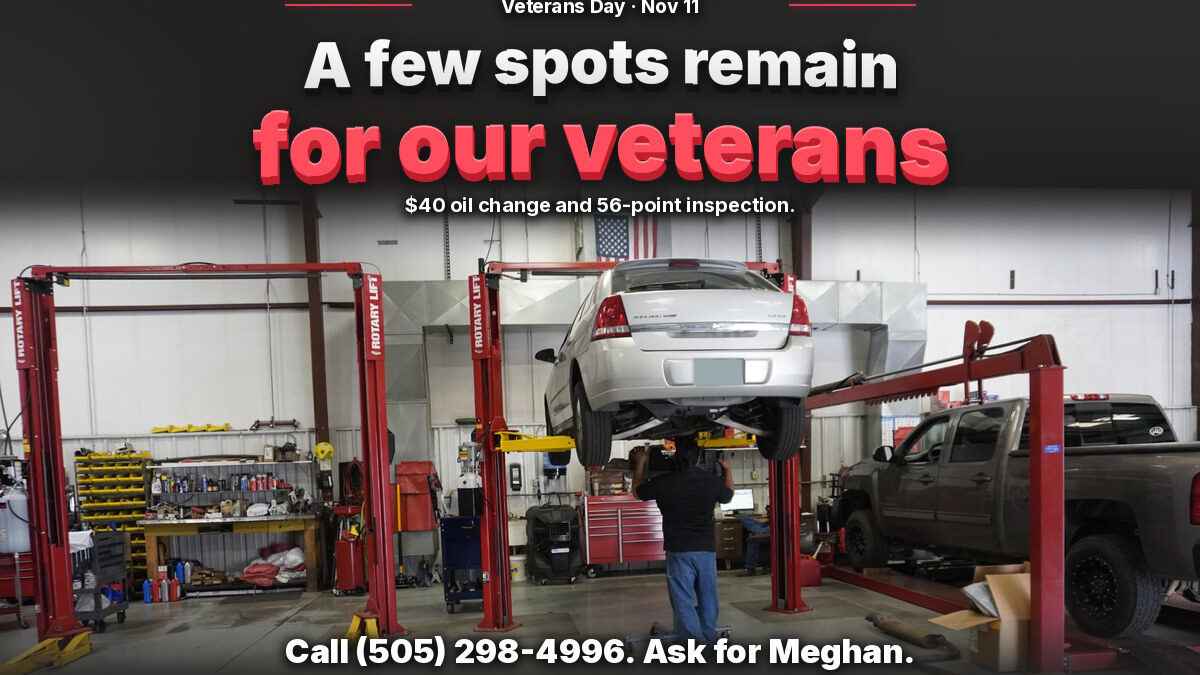
Most cars do not break down without warning. They warn you for months, in places you never look: the inside edge of a front tire, the underside of a radiator hose, the color of the fluid in a reservoir you have not opened since you bought the vehicle. By the time the warning reaches the dashboard or the steering wheel, the inexpensive version of the repair is usually gone.
The oil change is the one time most vehicles are regularly up on a lift with the hood open and a trained set of eyes underneath. What happens in those minutes decides whether a small problem gets caught while it is still small. That is why the oil change we are giving veterans tomorrow comes with a 56-point inspection attached, and why we think every driver should understand what an inspection like that is for.
- A multi-point inspection is a structured walk through every major system on the vehicle, done while it is already on the lift, so problems are found before they become breakdowns.
- Albuquerque’s heat, high-altitude sun, and wide temperature swings age batteries, rubber, and fluids faster than mileage alone would suggest.
- On Wednesday, November 11, the first 20 veterans to sign up get an oil change with a 56-point inspection for $40, and every dollar goes to the New Mexico Veterans Integration Center.
Why the Oil Change Is the Right Moment to Look
Think about how rarely anyone sees the underside of your vehicle. You see the paint, the dash, and the top of the engine if you open the hood. You do not see the brake hoses, the axle boots, the back side of the tires, or the slow seep at the bottom of the oil pan. Those are the places where trouble starts.
During an oil change the vehicle is in the air, the wheels are at eye level, and the technician already has a light in hand. Adding a disciplined checklist to that visit costs very little time. Skipping it means the next person to look underneath may be a tow truck driver.
A checklist also matters because of how people work. Without one, a technician looks at what seems interesting. With one, every system gets the same attention on every vehicle, including the ones that look fine. The problems worth finding are usually on the vehicles that look fine.
Under the Hood: Fluids, Belts, Hoses, and the Battery
Fluids tell the story of the systems they live in. Engine oil is checked for level and condition. Coolant is checked for level, condition, and freeze protection, because coolant stops protecting against corrosion long before it stops carrying heat. Brake fluid absorbs moisture over time, which lowers its boiling point and corrodes the system from the inside. Transmission and power steering fluid are checked where the vehicle allows it. A fluid that is low is a symptom, and the real question is always where it went.
Belts and hoses are next. A modern serpentine belt often wears by losing material from its grooves instead of cracking, so it can look acceptable at a glance and still slip under load. Hoses fail from the inside out. A technician squeezes them looking for soft, swollen, or brittle spots, and checks the clamps and connections for crusted coolant.
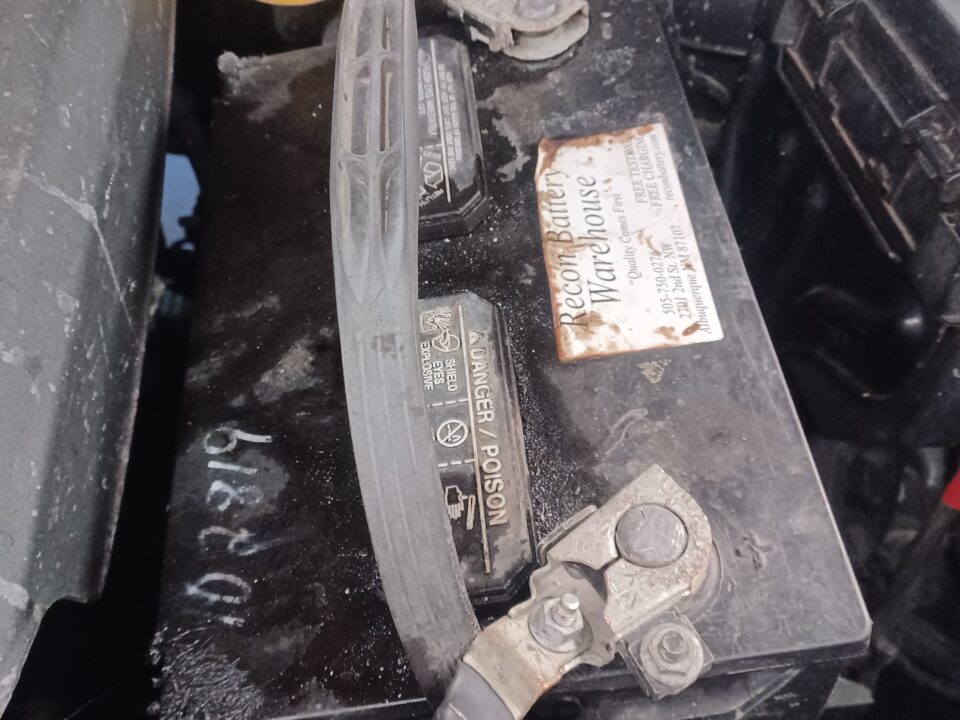
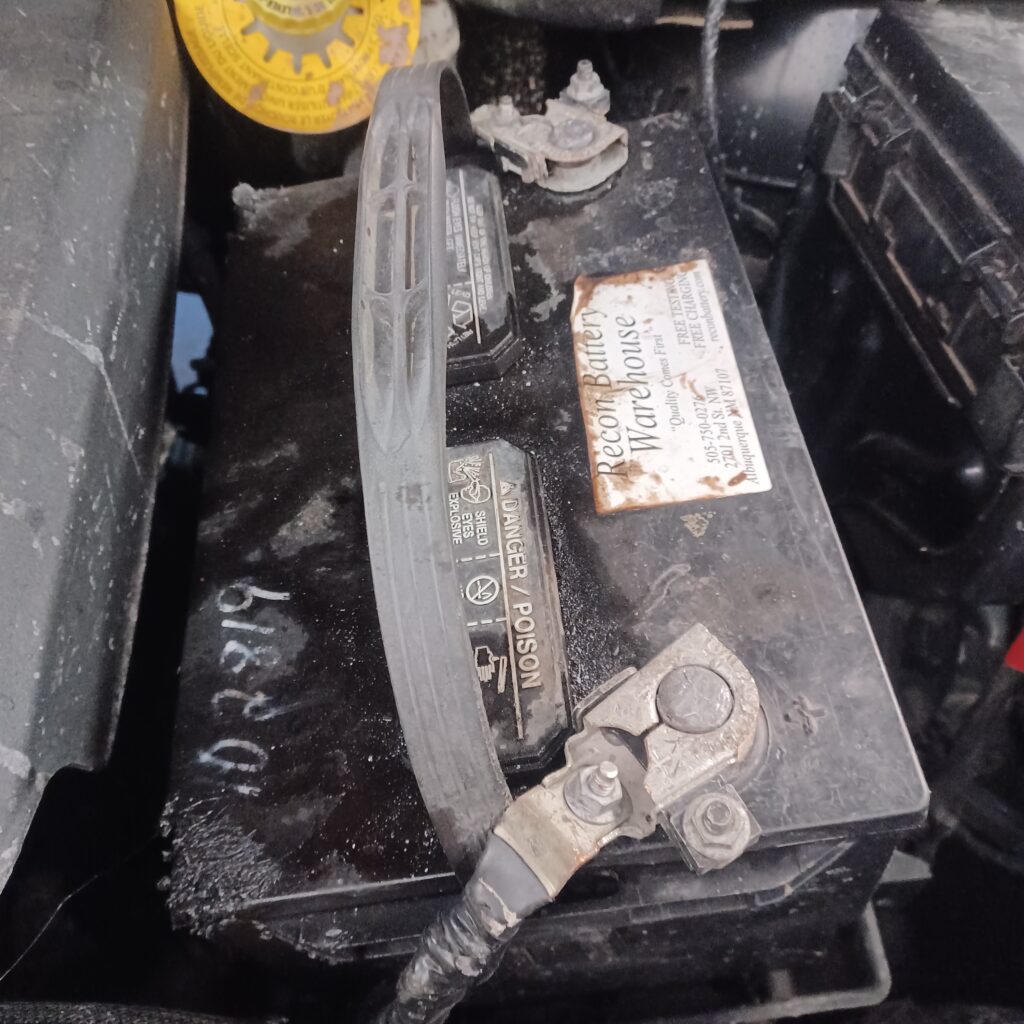
Then the battery. In this climate, summer does the damage and the first cold mornings expose it. A battery test measures what the battery can actually deliver, not just whether the engine started today. Terminals are checked for corrosion, and the battery is checked to be sure it is held down securely, because vibration shortens battery life.
Filters, wiper blades, exterior lights, and the horn round out this part of the inspection. None of them are dramatic. All of them are things you want working on the night you need them.
Under the Vehicle: Brakes, Tires, Steering, and Suspension
This is where a lift earns its keep. Brake pads are measured, not guessed at, and the rotors, calipers, and brake hoses are checked for wear, leaks, and cracking. A number in millimeters lets you plan a brake job. An adjective like “getting low” does not.
Tires are read across the full width of the tread. Even wear means the alignment and inflation are doing their jobs. Wear on one edge points to alignment. Scalloped patches around the tread point to worn shocks or struts. Tread depth is measured, pressure is set, and the sidewalls are checked for the fine cracking that New Mexico sun produces on tires that still have plenty of tread left.
Steering and suspension parts are checked for looseness and leaks: tie rod ends, ball joints, shocks, struts, and the rubber boots that keep grease in the axle joints. A torn boot is a minor repair. The joint it was protecting, once the grease is gone and the grit is in, is not.
Finally, the technician looks for leaks and at the exhaust. Where a drip is coming from, and what color it is, narrows down a problem quickly. An exhaust leak is worth knowing about for the noise and, more importantly, for what it can let into the cabin.
What You Should Walk Away With
A good inspection ends with information, not pressure. You should leave knowing three things: what is fine, what needs attention soon, and what can wait. Each item that needs work should come with a reason you can understand and, where it applies, a measurement.
That is how James Bracken, our owner and an ASE Certified Master Technician, has run this shop for decades. You get a plain explanation and you make the decision. Not every finding is urgent, and a shop that treats every finding as urgent is not doing you a favor. The point is that you get to choose the timing, instead of the vehicle choosing it for you on I-40.
If you have not had a vehicle looked over since before summer, late fall is a sensible time. Heat is hard on batteries, coolant, and rubber, and cold weather is when the damage shows up.
Tomorrow at Advantage Automotive
Wednesday, November 11, is our Veterans Day event, and it is how we are marking 40 years on Paisano Street. The first 20 veterans to sign up get a full oil change with a 56-point inspection for $40. NAPA AutoCare is donating the oil and filters, so every dollar goes to the New Mexico Veterans Integration Center. The offer excludes diesel engines, European makes, and motor homes.
If a spot is still open when you read this, call (505) 298-4996 and ask for Meghan.
Everyone is welcome from 8:00 AM to 3:00 PM. There will be food, raffles, and vendors on site. Veterans eat free, and a donation from everyone else is appreciated. We are collecting cash, nonperishable food, and new socks and new underwear for the VIC. Please leave coats and other clothing at home, because the VIC has no room to store them.
Come by, bring socks, and stay for lunch.
Advantage Automotive
511 Paisano St. NE
Albuquerque, NM 87123
(505) 298-4996