
Recon Battery vs. New Battery: Which One Is Right for Your Vehicle?
July 31, 2026
Steering, Suspension, and the Case for a Fall Alignment
September 20, 2026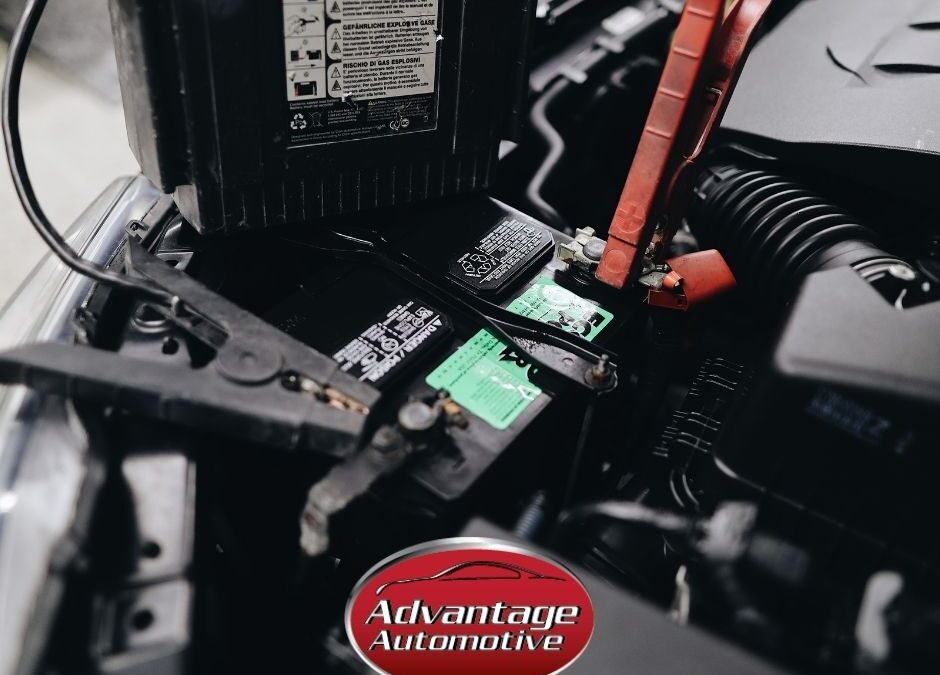
Most drivers meet their dead battery on a cold morning and blame the weather. The cold only exposed the problem. The real damage was done over three months of Albuquerque summer, when under-hood temperatures ran far past anything printed on the battery label. Late August is when the weakest batteries start losing that fight, and a five minute test now is a great deal cheaper than a tow later.
- Sustained heat evaporates electrolyte and corrodes the internal plates, which is what actually shortens battery life
- In this climate most batteries reach the end of their useful service around three to four years, not the five you may expect
- A load test takes minutes and tells you whether your battery will make it through fall and into winter
What Heat Actually Does Inside the Case
A lead acid battery is a chemical device, and chemistry speeds up when it gets hot. Engine bay temperatures in an Albuquerque July routinely sit between 140 and 200 degrees, and at those temperatures the water in the electrolyte evaporates faster than the battery can tolerate. As the fluid level drops, the tops of the lead plates are exposed to air and begin to sulfate and corrode. That corrosion is permanent. Every hot afternoon takes a small, unrecoverable bite out of the battery’s ability to hold and deliver a charge.
Heat also accelerates grid corrosion, which is the slow breakdown of the internal framework that carries current out of the plates. A battery losing grid structure can still show a healthy 12.6 volts sitting in the driveway while being completely unable to deliver the several hundred amps a starter motor demands. That gap between resting voltage and real cranking capacity is why a battery can seem fine right up until the morning it does not turn the engine over at all.
Why Cold Mornings Get the Blame
Cold does two things, and neither of them is the actual cause of failure. First, low temperatures slow the chemical reaction inside the battery, so a battery that could deliver 600 cranking amps in September might only manage 350 on a 20 degree December morning. Second, cold thickens engine oil, so the starter has to work harder at the exact moment the battery has the least to give. A healthy battery handles both without complaint. A battery that spent the summer cooking does not.
This is why the first genuinely cold morning of the season produces a wave of no-starts across the city. Those batteries did not fail that morning. They failed in August and simply had enough reserve left to hide it while the weather stayed warm. The useful lesson is that the right time to test a battery in New Mexico is at the end of summer, not the beginning of winter.
The Three Year Mark in This Climate
National averages put battery life somewhere between three and five years. Those averages are built on a country that includes a great deal of mild coastal driving. In the high desert, three to four years is the honest expectation, and short trips make it shorter still. A car that mostly runs errands of ten or fifteen minutes never gives the alternator enough time to fully replace what starting the engine consumed, so the battery lives in a chronic state of partial discharge, which is its own separate cause of sulfation.
Watch for these signs, and treat any of them as worth a same week visit:
- The engine cranks noticeably slower than it did a month ago, especially on the first start of the day
- Headlights dim at idle and brighten when you rev the engine
- The battery case looks swollen, or there is white or blue crust on the terminals
- Your dash shows a battery or charging warning light, even intermittently
- You have needed a jump start even once in the past year
Corrosion at the terminals deserves a specific note. That fuzzy buildup is resistance, and resistance means the alternator cannot fully recharge the battery and the starter cannot fully draw from it. Cleaning terminals is a small job that sometimes resolves what looks like a failing battery, and it is one of the first things we check.
What a Proper Battery Test Involves
A voltmeter reading is not a battery test. It tells you the state of charge at that moment and nothing about capacity under load. A real test puts the battery under a controlled draw, measures how far the voltage sags and how quickly it recovers, and compares the result against the cold cranking amp rating stamped on the case. Modern conductance testers do this in a couple of minutes without discharging the battery.
The test should not stop at the battery. Charging system output matters just as much, because an alternator putting out too little voltage will slowly starve a good battery, and one putting out too much will cook it from the inside in a matter of months. Replacing a battery without checking the charging system is how people end up buying two batteries in one year. We test both, along with the terminals, cables, and ground connections, and we tell you plainly whether you are looking at a replacement now or a component with another season left in it.
Every battery and charging system repair we perform is covered by our NAPA Gold 36 month, 36,000 mile nationwide warranty, honored at NAPA AutoCare Centers across the country.
If your battery is three years old or more, or if anything on the list above sounds familiar, have it tested before the first cold snap makes the decision for you. Call us to book a battery and charging system check, and we will give you a straight answer about where you stand.
Advantage Automotive
511 Paisano St. NE
Albuquerque, NM 87123
(505) 298-4996