
Summer Car Safety Tips: What to Check Before Your Road Trip
April 23, 2026
Before the Summer Road Trip: A Brakes-First Pre-Trip Check
May 22, 2026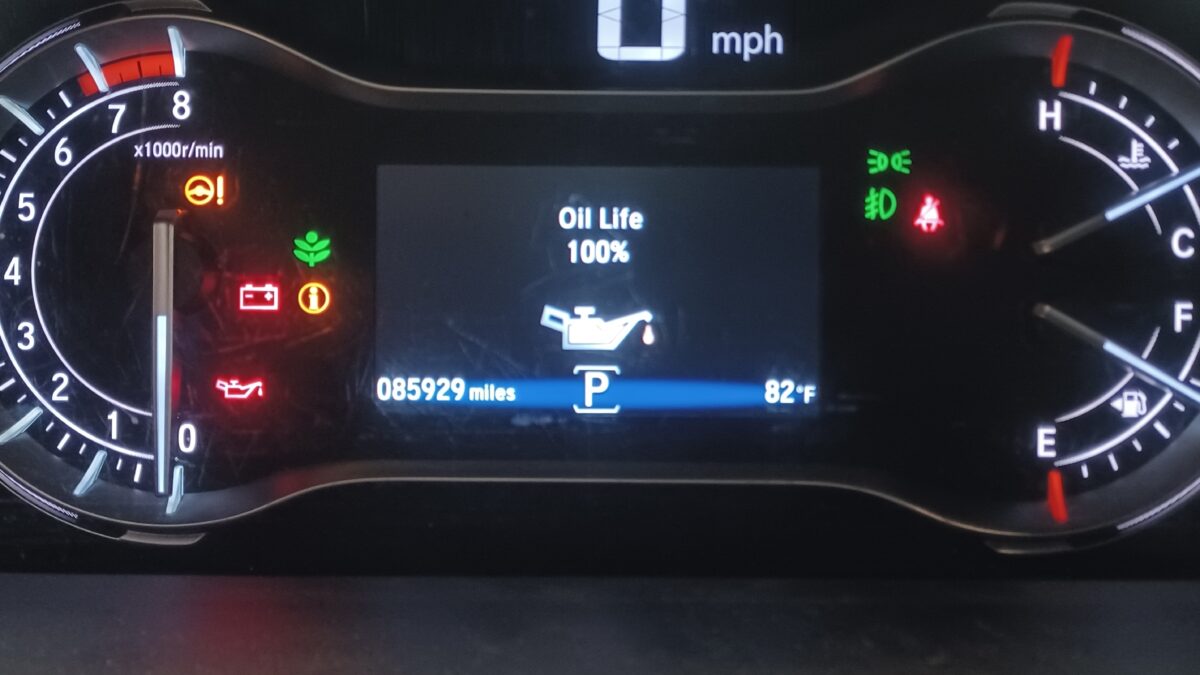
After an oil change, most drivers leave with a small sticker in the corner of the windshield showing the mileage for the next service. Many newer vehicles also display an oil life percentage on the dashboard. When those two numbers seem to disagree, it raises a fair question we hear often at the shop: should you follow the oil life monitor or the mileage on the sticker?
– The windshield sticker gives you a fixed mileage target, while the oil life monitor adjusts to how you actually drive
– Driving conditions like short trips, towing, and extreme heat can wear out oil faster than mileage alone suggests
– The safest approach is to change your oil at the sticker mileage or before the monitor drops below 15 percent, whichever comes first
What the Windshield Sticker Tells You
The sticker on your windshield lists the mileage at which we recommend your next oil change. It is a simple, reliable way to stay on a consistent maintenance schedule without having to interpret anything on the dashboard. When you reach that mileage, it is time to bring the vehicle in. Because it is based on a set interval, the sticker gives you a clear and predictable target that is easy to plan around.
How the Oil Life Monitor Works
Many modern vehicles use an oil life monitoring system that estimates how much useful life your oil has left. Rather than counting miles alone, it factors in the way the vehicle is actually used, including:
– Driving habits and speed
– Engine operating temperature
– Idle time
– Towing or heavy loads
– Frequent short trips
– Overall engine operating conditions
Because the monitor responds to these conditions, two vehicles with the same mileage can show very different oil life percentages. A car used for short errands around Albuquerque in the summer heat may use up its oil life faster than one driven mostly on the highway.
Reading the Oil Life Percentage
If you do watch the dashboard percentage, here is a general guide to what the readings mean:
– 20 percent: time to start planning your next oil change
– 15 percent: a good point to schedule service
– 5 percent: service is overdue, so change the oil as soon as possible
– 0 percent: change the oil right away
One important note: the oil life monitor estimates usage, but it does not measure your actual oil level or catch a slow leak. No matter which guide you follow, it is worth checking your oil level between changes so a low level does not go unnoticed.
Why We Recommend Following the Sticker
We recommend using the mileage on the windshield sticker as your primary guide, and treating 15 percent oil life as your backstop. Waiting until the monitor reaches very low percentages can add unnecessary wear to your engine, especially under demanding conditions such as:
– Stop-and-go driving
– Extreme temperatures
– Frequent short trips
– Towing or hauling
– Turbocharged engines
Sticking to a consistent interval helps maintain proper lubrication, steady engine performance, good fuel efficiency, and a longer engine life. Regular service also gives us a chance to spot small issues before they become expensive repairs.
Our Recommendation
For the best engine protection, change your oil at the mileage listed on your windshield sticker, or before your oil life monitor drops below 15 percent, whichever comes first. Following this simple rule helps you avoid overdue maintenance and keeps your vehicle running at its best. If you ever have questions about the right service interval for how you drive, our team is happy to help.
Advantage Automotive
511 Paisano St. N.E.
Albuquerque, NM 87123
(505) 298-4996