Oil Life Percentage vs. Oil Change Sticker: Which One Should You Follow?
May 18, 2026
Why Routine Maintenance by Mileage Is More Important Than Ever on Newer Vehicles
June 24, 2026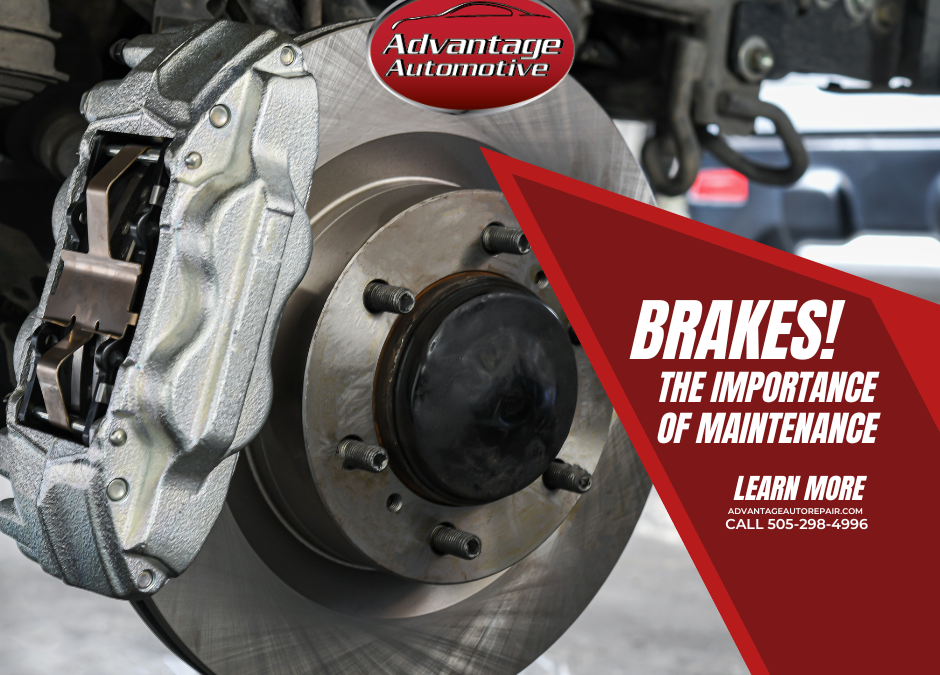
Summer in New Mexico means loaded cars, long highway miles, and mountain grades that ask far more of your vehicle than your daily commute ever does. Of every system under the hood and around your wheels, your brakes carry the heaviest burden on a road trip, especially on the long descents out of the Sandias or down from the Colorado high country. The trouble is that the systems most likely to fail on a trip rarely show their weak spots in stop-and-go city driving, so the breakdown waits until you are farthest from help. A short check before you leave, starting with the system that stops you, is the difference between a smooth getaway and a roadside scramble far from home.
- Your brakes are the system that keeps you safe in an emergency, and a loaded road trip pushes them hardest, so they come first
- Worn wipers, tired oil, and low tire pressure each have a way of failing miles from the nearest exit
- A quick inspection before you leave prevents breakdowns, protects your family, and costs far less than an emergency repair on the road
Brakes Under a Full Load
Brakes turn your car’s motion into heat, and a road trip generates a lot of it. A vehicle packed with passengers, luggage, and a cooler rides heavier than your usual commute, which means longer stopping distances and more strain on every pad and rotor. Long downhill stretches make it worse, because riding the brakes on a grade builds heat with no chance to shed it, and that heat is what fades your stopping power right when you need it most. The same brakes that feel perfectly fine on the drive to work can feel alarmingly soft halfway down a mountain pass with the car loaded for vacation.
Of every system on your car, the brakes are the one that has the final say in an emergency. The engine gets you moving, but stopping is what keeps you and everyone in the car safe, and a braking system only performs when its parts are in good shape. Brake pads wear down a little with every stop, and once the friction material runs thin your stopping distance grows and the metal backing can begin to score the rotor. Brake fluid matters just as much. It absorbs moisture over time, and that moisture lowers the temperature at which the fluid boils, which is exactly what produces a soft, sinking pedal when the brakes get hot on a long descent. Replacing the fluid on the schedule in your owner’s manual keeps the pedal firm and the whole system responsive.
This is why regular brake service is not an upsell. It is the cheapest insurance on the car. A technician can measure how much pad you have left, check the rotors for warping and scoring, inspect the lines and hoses for leaks or corrosion, and test the condition of the fluid, all before any of it becomes a roadside emergency. Catching a worn pad early is a routine, low-cost job. Ignoring it until it grinds into the rotor turns a small bill into a large one, and a missed leak in a brake line is the kind of problem you never want to discover on a grade. Watch for the early warning signs at home: a squeal or grind when you stop, a soft or spongy pedal, a shudder through the steering wheel, or the car pulling to one side. Any one of these is reason enough to have the brakes inspected before you load the car, not after the pedal goes soft on a mountain road.
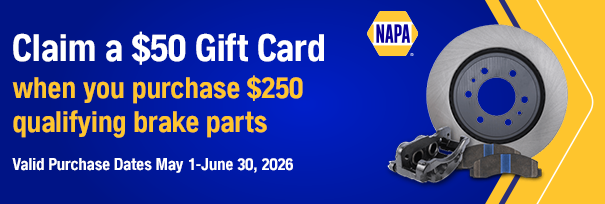
There is also a genuinely good reason to handle your brakes now rather than later in the summer. Through a current NAPA promotion, you can claim a $50 gift card when you purchase $250 in qualifying brake parts, with valid purchase dates running May 1 through June 30, 2026. If your pads, rotors, or other brake components are due, taking care of them before your road trip lines up almost perfectly with that window, so you get the safety of a fresh brake job and a little money back in your pocket. Ask our team which parts qualify and how to claim the gift card when you bring your vehicle in.
Wipers and Clear Visibility
The New Mexico sun is hard on wiper blades. The rubber bakes, cracks, and stiffens long before most drivers think to replace it, and the blade quietly loses its ability to clear the glass. You tend to find out at the worst possible moment, when a sudden summer storm rolls off the mountains and turns the windshield into a smear at highway speed, or when low afternoon sun lights up a film of bug splatter you cannot see past. Visibility is a safety system too, and it can fail just as suddenly as any other.
The check takes a minute. Wet the windshield, run the wipers, and watch for streaking, skipping, or chatter. If the blade smears instead of clears, replace it before you go rather than hunting for a parts store in an unfamiliar town. Top off the washer fluid while you are there, because a long drive coats the glass in bugs and road grime faster than you would believe, and a dry reservoir leaves you squinting straight into the glare with nothing to clear it.
Oil for the Long Haul
Highway miles and summer heat ask a lot of your engine oil. Oil that is low or a little overdue can coast through your daily routine without a sign of trouble, because short trips never push it hard. A road trip is different. Hours at sustained highway RPM in summer heat thin worn oil and speed up its breakdown, and a long haul is exactly the wrong place to discover that the oil protecting your engine is past its prime.
Check the level on flat ground before you leave, and look at when the last change was actually done rather than when you think it was. If you are close to your service interval, or you genuinely cannot remember the last one, get it handled now. Fresh oil and a clean filter are among the cheapest forms of protection you can give an engine, and starting a long trip with both beats babying a tired engine to the next exit.
Tire Pressure and Tread
Heat and tires have a complicated relationship. Air expands as it warms, so pressure naturally climbs on a hot road, but an underinflated tire running at highway speed in the heat is the classic recipe for a blowout. An underinflated tire flexes more than it should, that flexing builds heat, and heat is what breaks rubber down until the tire lets go, usually at speed and usually at the worst moment. The extra weight of a loaded car only raises the stakes.
Check your pressure when the tires are cold, before you drive anywhere, and set it to the number on the door jamb sticker rather than the maximum printed on the sidewall, since that maximum is a limit and not a recommendation. Look the tires over while you are down there for uneven wear, cracking, or bulges, any of which is worth a professional opinion before a long trip. Make sure the spare is aired up and the jack is where it belongs, because the time to learn your spare is flat is not on the shoulder of the interstate.
One Inspection, Everything Covered
The thread running through all of this is simple. The road trip is a test your car has not taken yet, and the driveway is the only place to pass it on your own terms. Each of these systems can feel completely normal around town and still reach its limit under the load, heat, and distance of a real trip. A single pre-trip inspection catches the brakes, wipers, oil, and tires together, which costs far less in time, money, and stress than handling any one of them on the side of a highway hundreds of miles from home.
A pre-trip inspection takes a small fraction of the time and money a roadside breakdown will cost you, and it lets you pull out of the driveway knowing the systems that matter most are ready for the miles ahead. Bring your vehicle by Advantage Automotive before you head out, and we will go through your brakes, wipers, oil, and tires together. If your brakes are due, ask about the NAPA gift card offer while it lasts, so the only thing left to think about on the road is where to stop for lunch.
Advantage Automotive
511 Paisano St. N.E.
Albuquerque, NM 87123
(505) 298-4996